Boston Real Estate for Sale

Boston real estate: Inventory watch – Experts see improvements soon

Boston Real Estate for Sale 

Loading...

Boston real estate: Inventory watch – Experts see improvements soon

As of May 2026, experts are observing a long-awaited “thaw” in the Boston real estate market, with inventory finally showing measurable improvements. While the region remains one of the most supply-constrained in the country, several factors are driving a more balanced environment for the current spring season. 
Inventory Status and Trends
The typical spring surge is more pronounced this year, with local analysts reporting a notable shift in availability: 
  • Listing Growth: In April 2026, active listings in Boston rose 10.1% year-over-year, significantly outpacing the national growth rate of 4.6%. 
  • Condo Market Lead: The condo segment is seeing the most dramatic improvement, with new listings up 17.2% year-over-year. In some city neighborhoods, condo supply has reached nearly 4 months, nearing the 6-month threshold considered a “balanced” market. 
  • Accepting the “New Normal”: Sellers who previously felt “locked in” by low interest rates are beginning to list their homes due to life events (marriages, growing families) and a realization that rates in the 6% range are likely the long-term baseline.
Market Dynamics for Buyers and Sellers
While inventory is “loosening at the edges,” the market remains highly segmented: 
  • Bifurcation: Turnkey, well-priced homes still attract multiple offers within 10 days. However, properties that are overpriced or need work are sitting for 40–60 days, giving buyers rare negotiating leverage. Ford Realty Inc
  • Price Stability: Median single-family home prices in Boston sit near $857,000, reflecting a modest 1.4% to 4.4% annual growth. This is a shift from the “frantic spikes” seen in previous years toward a more sustainable pace. 
  • Hot Micro-Markets: High demand persists in areas with strong value-to-amenity ratios, such as East Boston, Winthrop, Revere, and Chelsea. 
Expert Outlook for Mid-2026 
Real estate professionals expect the next 4 to 6 weeks (leading up to Memorial Day) to be the most active period for new inventory. Experts from Bostonreb.com and Ford Realty Inc suggest that while a “supply cliff” remains a long-term risk due to lower construction permits in recent years, the current window offers the best options for buyers in over half a decade. 

Most experts expect relief to supply woes later this year, early 2022

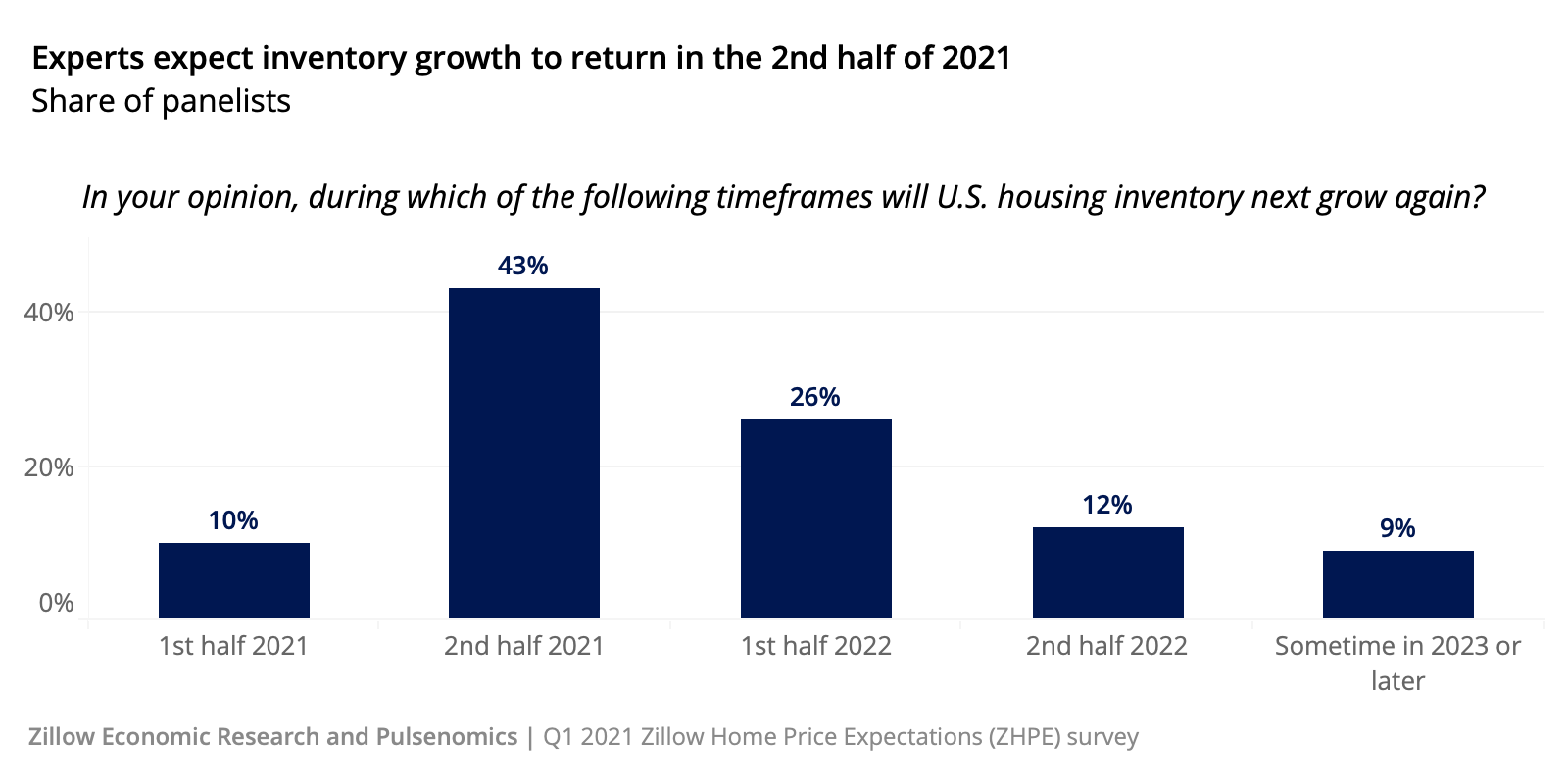
A plurality of economists and real estate experts surveyed by Zillow expects the second half of 2021 to deliver relief to the seemingly endless drought of housing inventory that has bedeviled U.S. markets during the pandemic.

Forty-three percent of respondents to the first-quarter Zillow Home Price Expectations survey expect inventory to improve in the second half of the year, followed by 26% who expect it in the first half of 2022.

Homeowners, many of whom have stayed put during the pandemic, finally listing their properties, are expected to be the main driver of the inventory increase, with 38% of survey respondents citing existing housing as the most likely catalyst for supply growth.
Click for the Ford Realty Flat Fee Menu of Services.

Peace be with you

inventory 25344c

Image courtesy of Zillow.

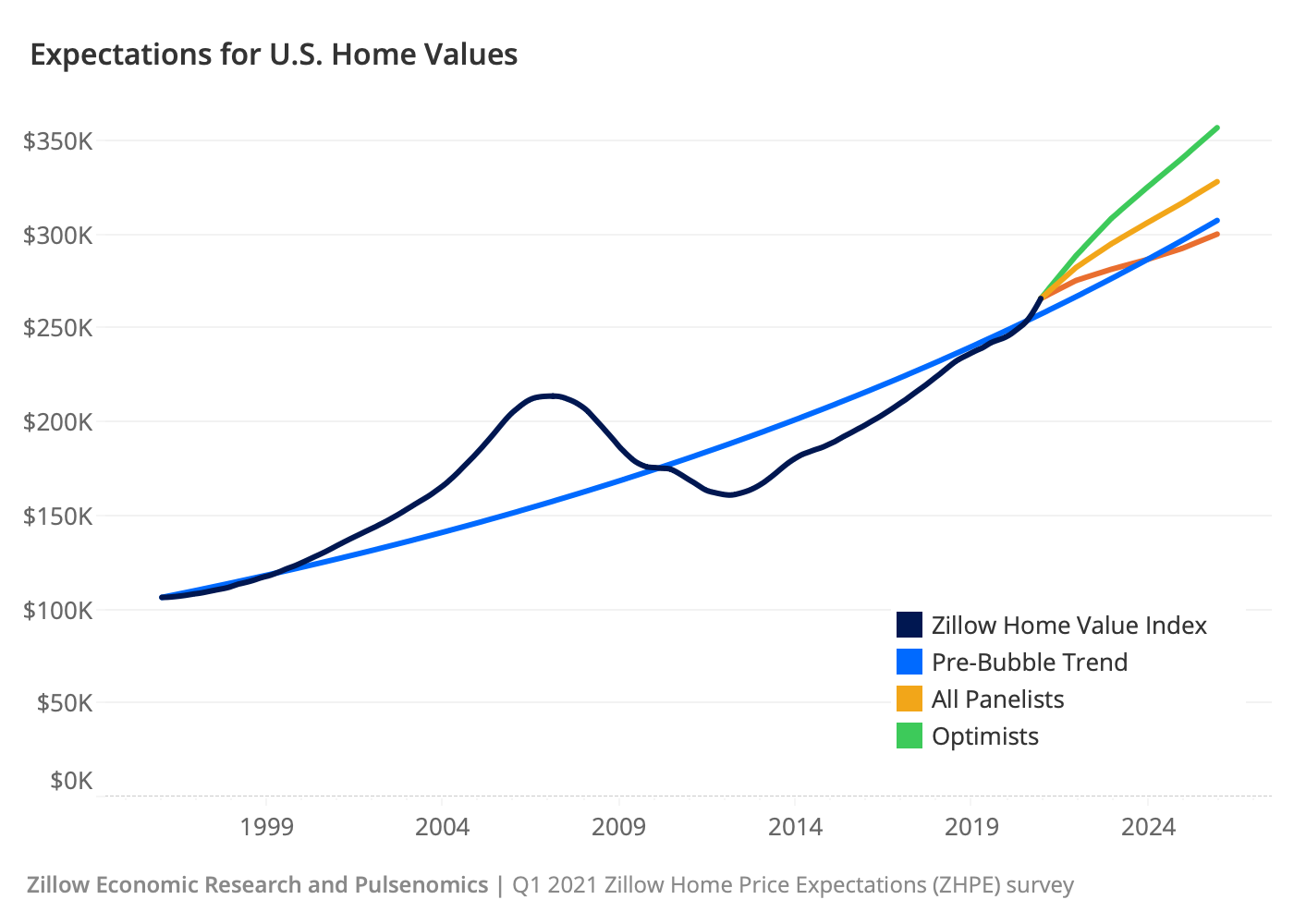
As supply increases, the fast pace of home-price growth is expected to slow from 6.2% in 2021 to 4.5% in 2022, 3.7% in 2023, 3.5% in 2024 and 3.6% in 2025.

“This is the most bullish near-term outlook for home prices we’ve seen from our experts since the early stages of the post-bust recovery, and the panel’s five-year average annual home price forecast has never been more optimistic,” said Pulsenomics founder Terry Loebs said in a press release, adding that “even with a robust economic rebound in the coming months affordability will likely remain a challenge for many aspirational renters looking to move into homeownership this year.”
zhv 21caa7

Image courtesy of Zillow.

The survey found other notable pandemic-related expectations as well.

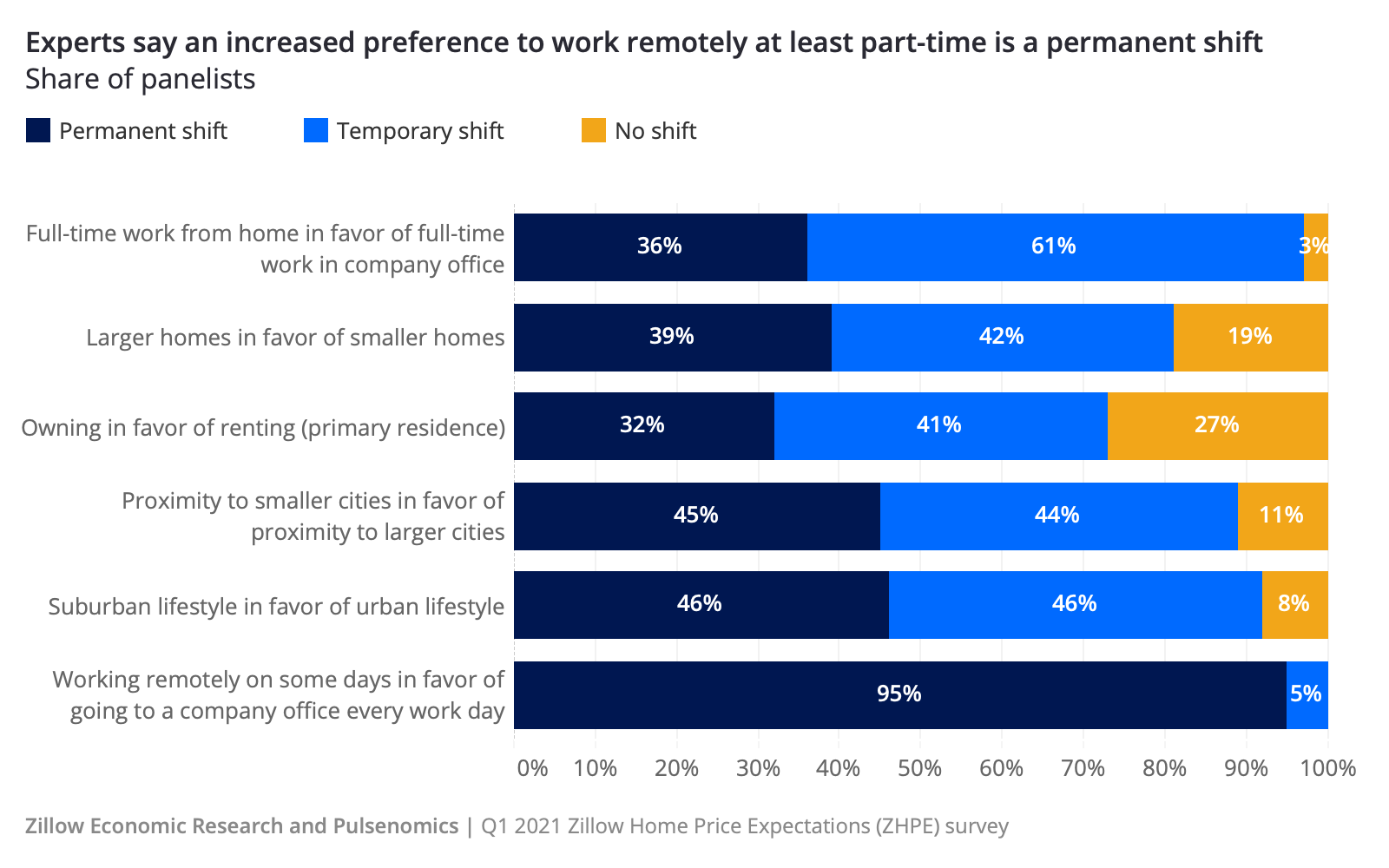
Of the 110 experts surveyed between Feb. 15 and March 1, 95% expect remote working is here to stay, at least part of the time.

The shift to a suburban life from an urban one is expected to be permanent by 46% of respondents, while an equal percentage expects the movement to be temporary. The shift to smaller cities from larger ones is similarly split, with 45% believing it to be permanent and 44% believing it temporary.
preference 5a9c11

Image courtesy of Zillow.


Call Now